




CO₂ at Home: Measure It and Just Open a Window
We spend most of our day indoors: sleeping, working, cooking, relaxing, and exercising. And throughout all of this, we breathe. With every breath we exhale CO₂. If there isn’t enough fresh air coming into the room, its concentration gradually increases.
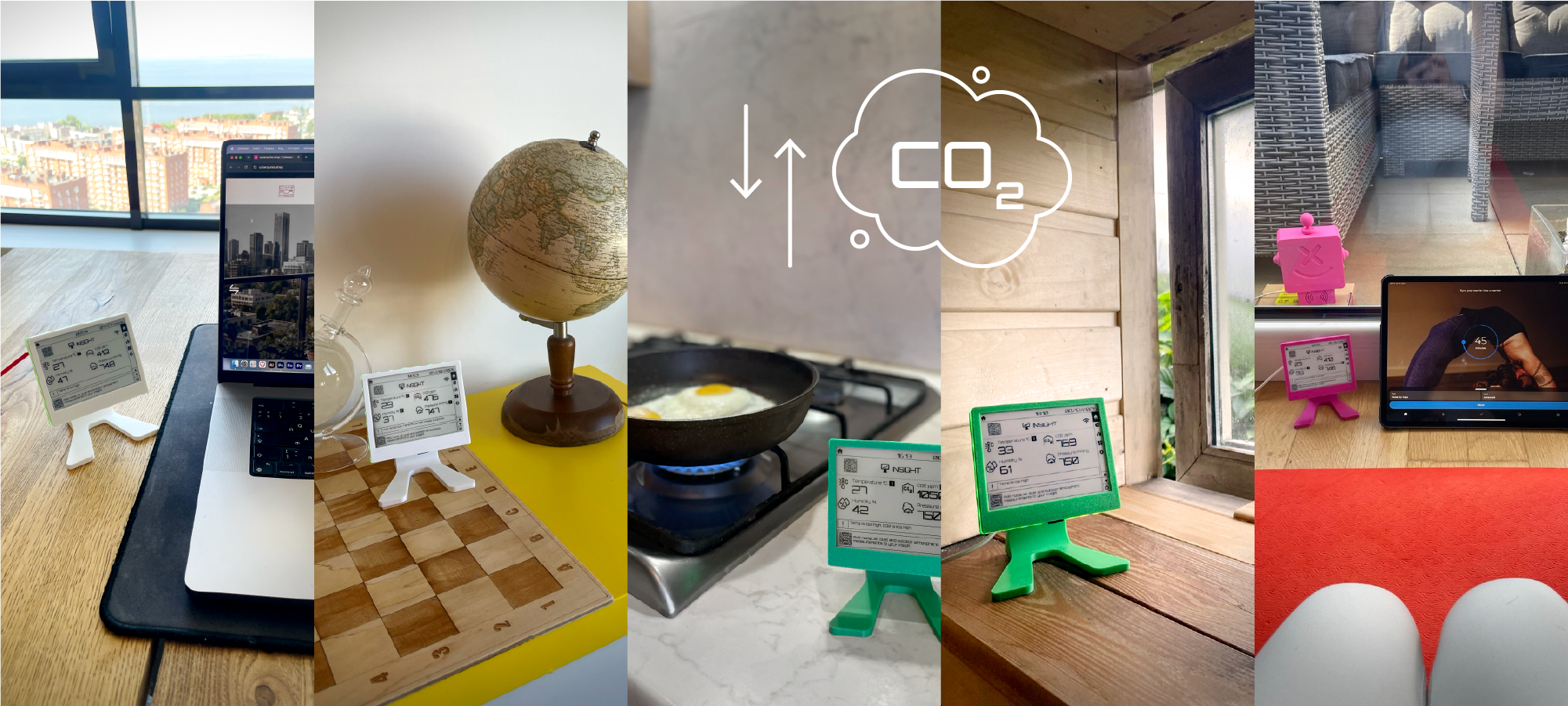
The problem is that we can’t sense CO₂ levels ourselves. There may be no unpleasant smell, the room may not feel stuffy, and nothing around us seems to change. That’s where Altruist Insight comes in: it continuously measures CO₂ right in the room where you are and shows the current level directly on its display. It also monitors temperature and humidity, helping you see how your indoor environment changes throughout the day.
Instead of guessing whether a room needs fresh air, you can simply look at the data. Altruist Insight helps turn an invisible change in the air into something you can see — and act on.
Often, All You Need to Do Is Open a Window
Elevated CO₂ indoors often means one simple thing: the room needs more fresh air. Altruist Insight shows you when CO₂ starts to rise and when it drops again after ventilation.
This is especially useful in winter, when you don’t want to cool the room too much; during hot weather, when you want to avoid letting too much heat inside; or during dusty periods and pollen season, when you may not want to keep the windows open longer than necessary. You can ventilate when you actually need to and for as long as necessary.
Your Workspace
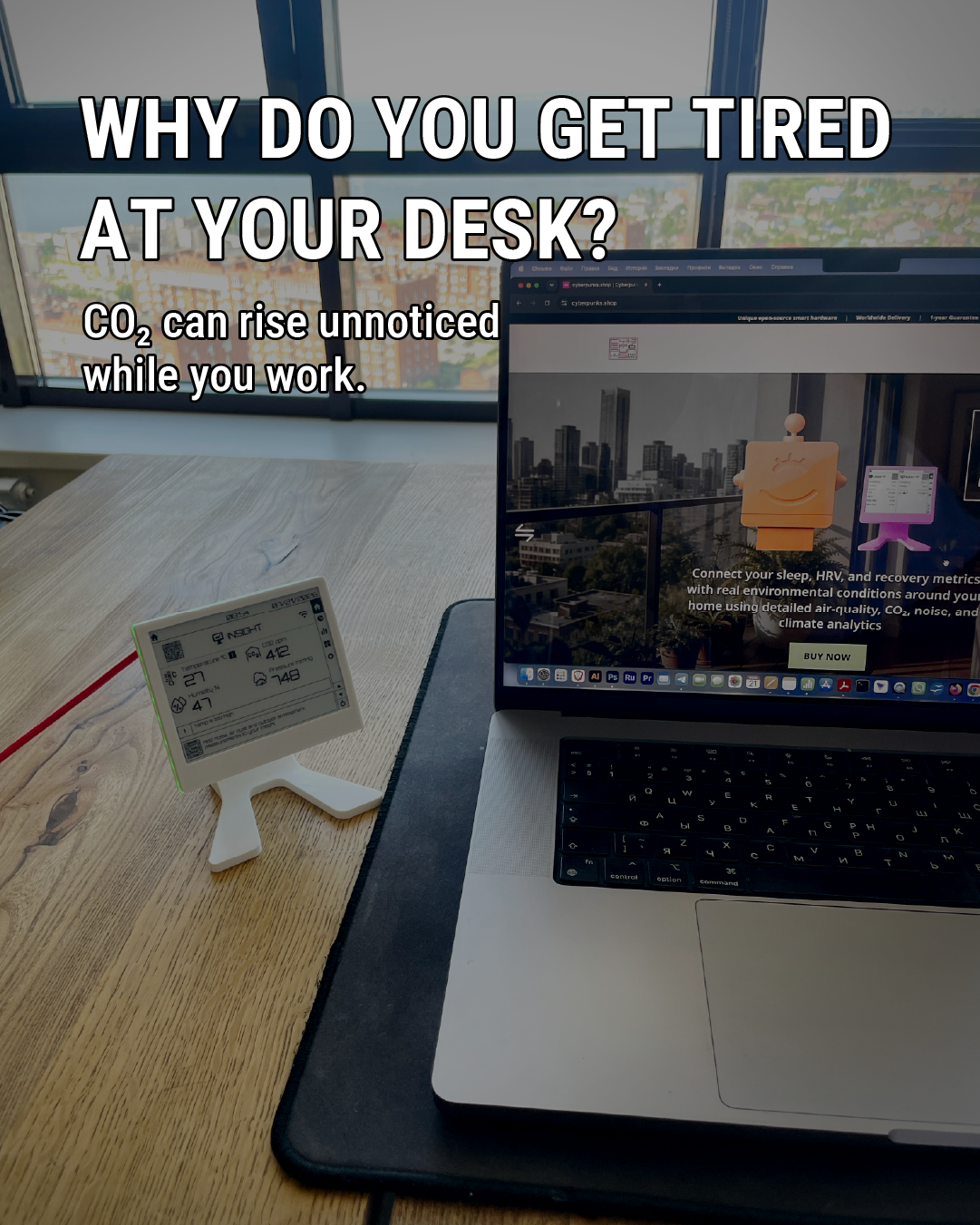
It’s easy to spend several hours at a computer without noticing how the air around you is changing. In a closed room, CO₂ gradually accumulates, and elevated levels are often a sign of insufficient ventilation. This can be associated with sleepiness, fatigue, a feeling of stuffiness, and difficulty concentrating, while research has also linked ventilation and higher CO₂ levels with changes in some measures of cognitive performance.
Altruist Insight lets you see the CO₂ level right on your desk and notice when the room needs fresh air. Sometimes just a few minutes of ventilation is enough to refresh the air and continue working in more comfortable conditions.
The Living Room: Family, Kids, and Guests
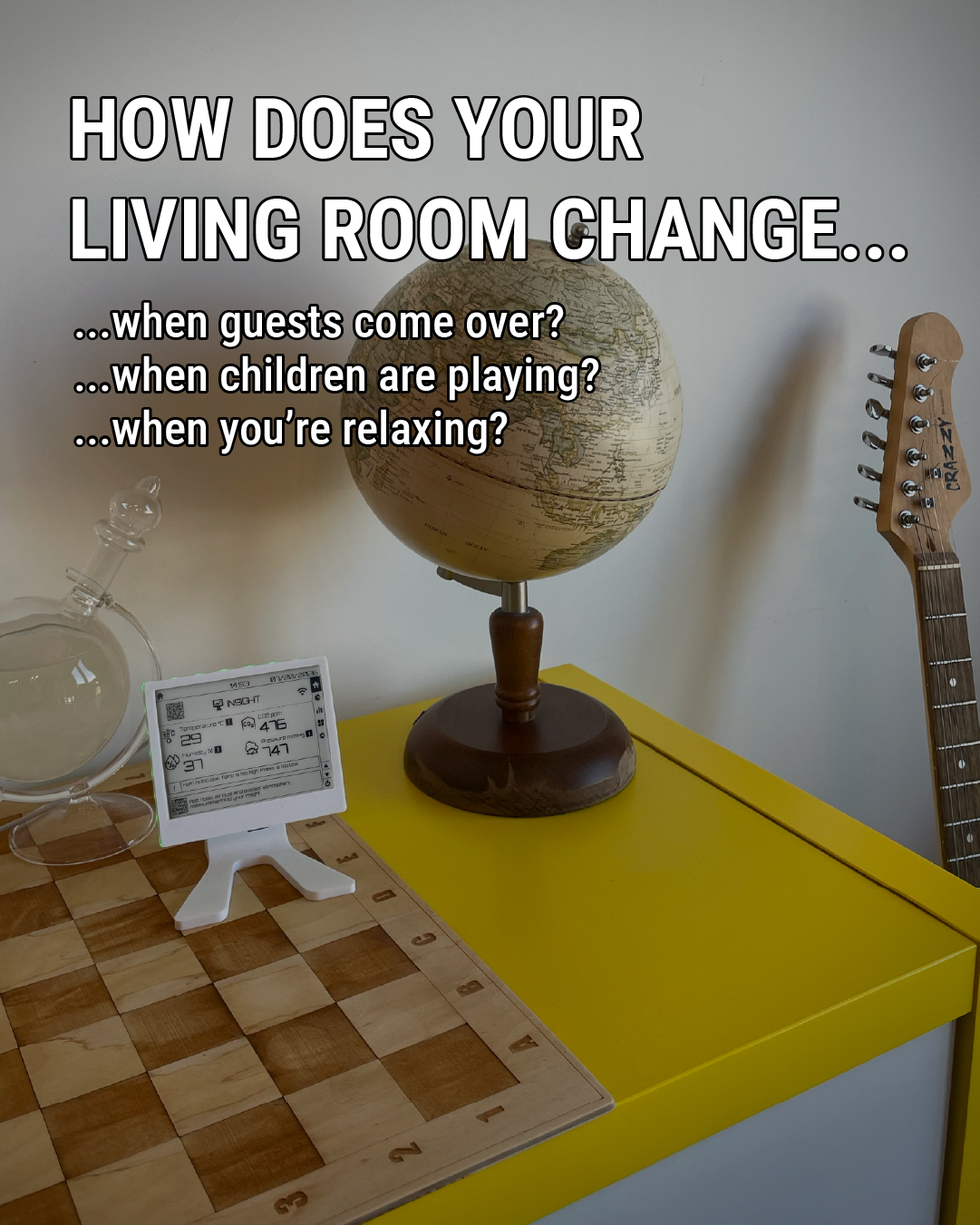
The conditions in your living room change with the number of people in it. One person reading a book is one situation. An evening with the whole family, children, friends, or guests is completely different. The more people there are in a closed room, the faster CO₂ can increase.
This is where monitoring becomes especially useful: you don’t have to wait until everyone starts feeling that the room is stuffy. Altruist Insight shows you how the air is changing and helps you see when it’s time to ventilate.
The Kitchen: While You Cook
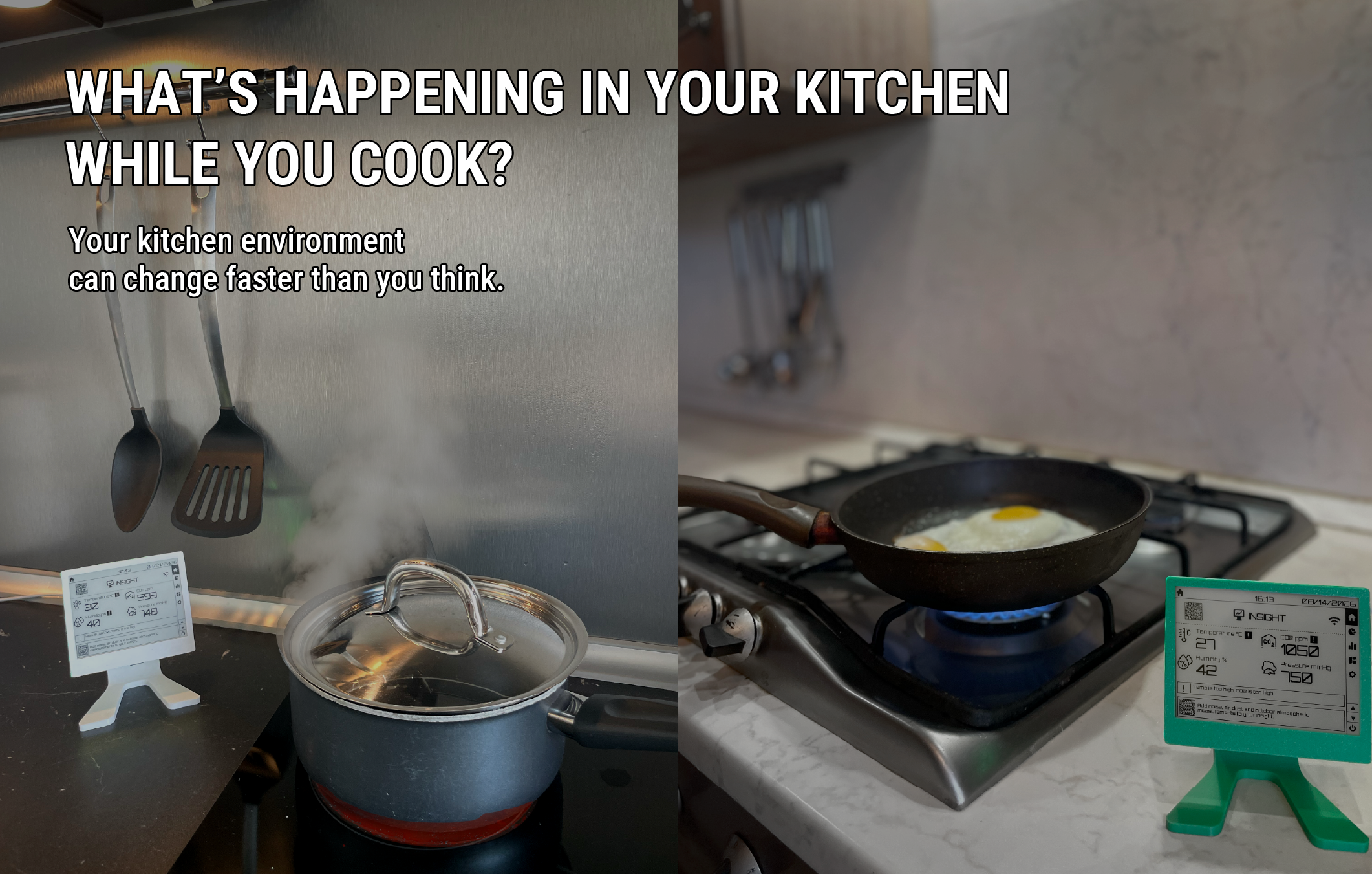
Air conditions in the kitchen can change quickly. Cooking raises temperature and humidity, and if you use a gas stove or gas oven, burning gas consumes oxygen and produces CO₂. At the same time, people in the kitchen continue to exhale CO₂. With insufficient ventilation, the concentration can increase noticeably.
With an electric or induction cooktop, the situation is different: no fuel is burned in the room, so the cooktop itself does not produce CO₂. But CO₂ can still rise while you cook simply because people are spending time in a poorly ventilated room.
Altruist Insight lets you monitor CO₂, temperature, and humidity while cooking and see when your kitchen needs fresh air.
Exercise and Yoga
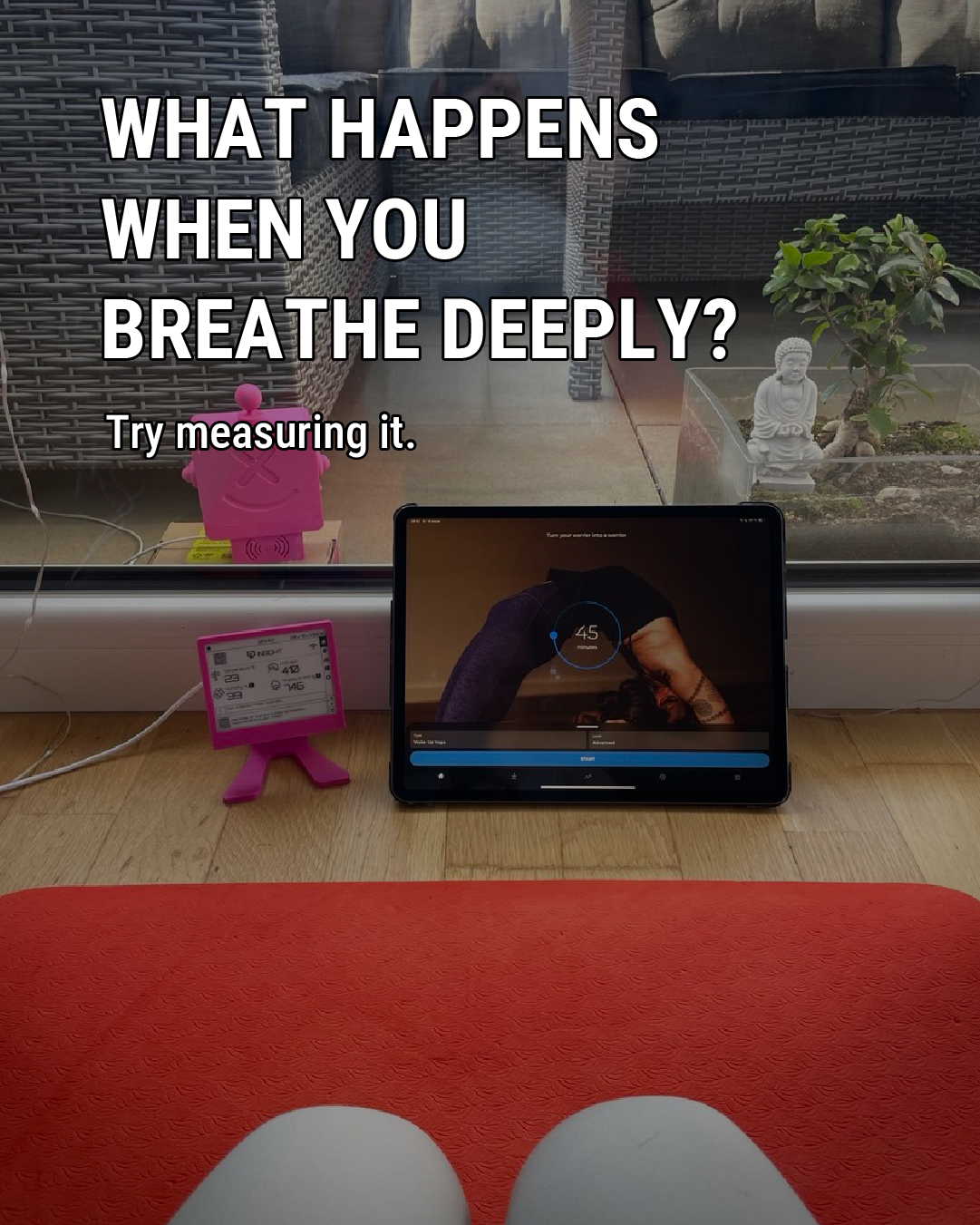
During active exercise, we breathe more frequently and intensely, so CO₂ can rise faster in a small closed room, especially when ventilation is limited.
During yoga and breathing practices, the physical load is different, but breathing itself becomes an important part of the session. Deep, controlled breathing and spending a long time in the same room are good reasons to pay attention to ventilation and fresh air.
You can even run a simple experiment with Altruist Insight: check the CO₂ level before, during, and after your workout, then open a window and see how quickly the reading changes.
The Bedroom: What Aren’t We Measuring While We Sleep?
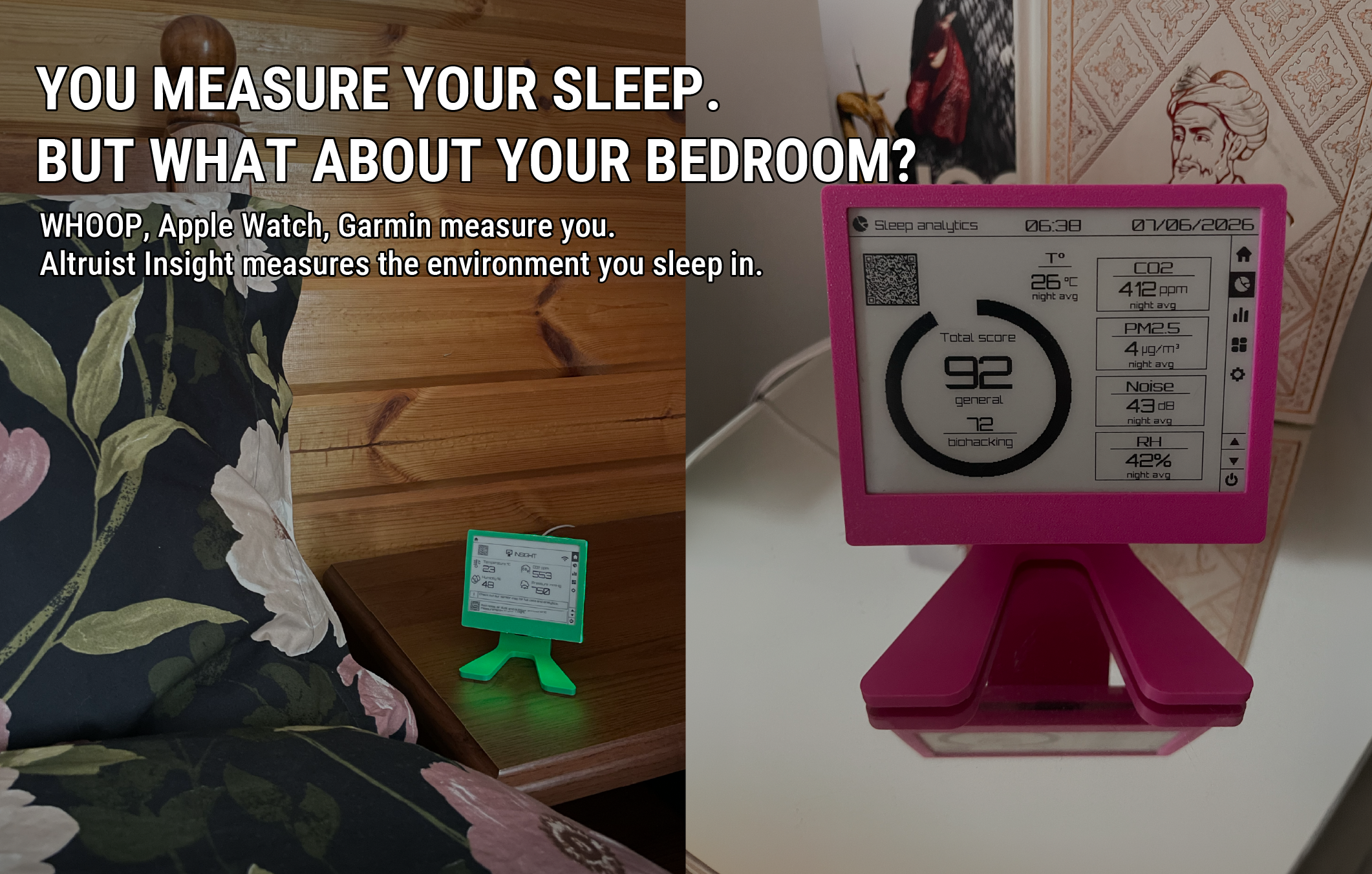
We are used to measuring our sleep. WHOOP, Apple Watch, Garmin, and other wearables track sleep duration, heart rate, HRV, breathing, sleep stages, and recovery. In the morning, we check our Recovery or Sleep Score — and sometimes wonder why our recovery wasn’t as good as expected even after eight hours of sleep.
But watches and fitness trackers mostly measure us, not the environment we sleep in. Temperature, humidity, and bedroom ventilation can also affect the conditions in which we sleep.
We spend seven, eight, or even nine hours in the same room overnight. If the windows and door are closed, CO₂ can gradually accumulate while we sleep. And it’s particularly difficult to notice because we simply don’t see what is happening to the air during the night.
Altruist Insight adds another layer to your sleep data — data about your bedroom. In the morning, you can see how CO₂, temperature, and humidity changed throughout the night and compare those conditions with your sleep and recovery. The reason for a less-than-perfect night may not only be how long you slept, but also the conditions you slept in.
If Insight shows that CO₂ rises significantly during the night, you can use that information to make decisions — for example, ventilate the bedroom more thoroughly before going to bed, leave a window or door slightly open overnight when conditions allow, or consider additional ventilation if high levels occur regularly.
Your wearable measures you. Altruist Insight measures the room you sleep in.
Sleep Analytics: Your Whole Night in One Report
Altruist Insight includes a dedicated Sleep Analytics feature. During the night, the device monitors the conditions in your bedroom and generates a Night Report and Comfort Score in the morning. The analysis includes CO₂, temperature, and humidity, and when Altruist Urban is connected, PM2.5 and nighttime noise peaks can also be taken into account. There are two evaluation modes: standard and the stricter Biohacking mode.
This is not an assessment of sleep stages or a medical evaluation of sleep quality. Sleep Analytics shows how comfortable the environment you slept in was.
Learn more about how the Night Report and Comfort Score work:
Insight Sleep Analytics: Understanding Your Night Report and Comfort Score
Extra Case: Your Home Sauna Relaxation Area
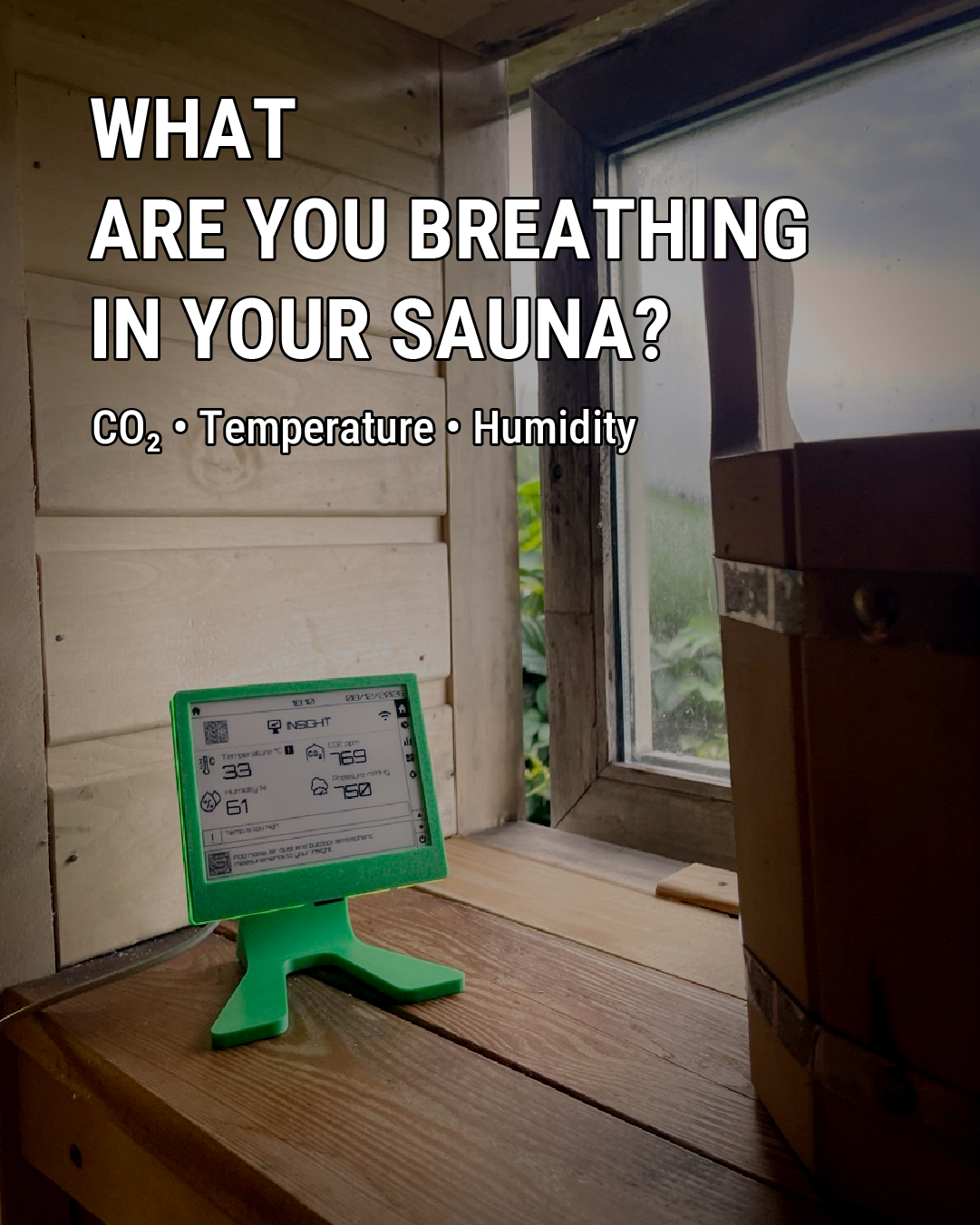
If you have a private sauna with a separate relaxation area at home, Altruist Insight can be useful there too. We’re not talking about placing the device inside the hot sauna cabin, but in the room where you relax and cool down between sauna sessions.
You may spend quite a lot of time in the relaxation area, especially when doing several sauna rounds. If the room is closed or several people are relaxing there together, CO₂ can gradually increase. Altruist Insight lets you monitor CO₂, temperature, and humidity, see when the relaxation area needs fresh air, and observe the effect of ventilation.
Measure Instead of Guessing
You don’t need to become an indoor air quality expert or constantly think about ventilation. Altruist Insight shows you CO₂ where your everyday life actually happens: while you work, cook, spend time with your family, exercise, and sleep — and even in your home wellness area if you have one.
And often, the action is very simple: see CO₂ rising, open a window, watch the level drop, and close the window again.
We can’t sense CO₂. But we can measure it.