
Web3 public sensors map
Welcome to the decentralized opensource sensors map which operates with the sole intent of serving the free will of individuals , without any beneficiaries. It offers two distinct layers of decentralization at your choise: peer-to-peer connectivity for direct access to sensor data, and the federative concept for accumulating sensor data and displaying measurement history. Click here for further technical details.
Map data © OpenStreetMap contributors




Your bookmarked sensors
Noise Data for Real Estate: Negotiate with Facts, Not Feelings
Saying "the construction is loud" is an opinion. Showing a month-long noise graph with daily peaks above 90 dB is evidence. We believe real sensor data fundamentally changes the context of housing negotiations — whether you are renting or buying.
The Hypothesis
Imagine you have a noise sensor on your balcony. Over a month, it builds a complete noise pollution profile — 24/7, day and night. When it's time to renegotiate your lease, you come to the table not with feelings, but with data.
Your landlord sees daily graphs with red and orange spikes. They can choose to ignore it — but it's much harder to dismiss a chart with clear explanations of how harmful these levels are, especially when the data is publicly available on an environmental monitoring map.
And here's the real leverage: if the landlord doesn't make concessions, how easy will it be to re-rent a place when prospective tenants can see the noise profile themselves?
Real Example: Two Neighborhoods in Limassol
Below are actual measurements from Altruist sensors installed on balconies of two residential buildings in Limassol, Cyprus. Both are premium-class properties — but the noise tells very different stories.
Neapoli (Molos area) — noisy
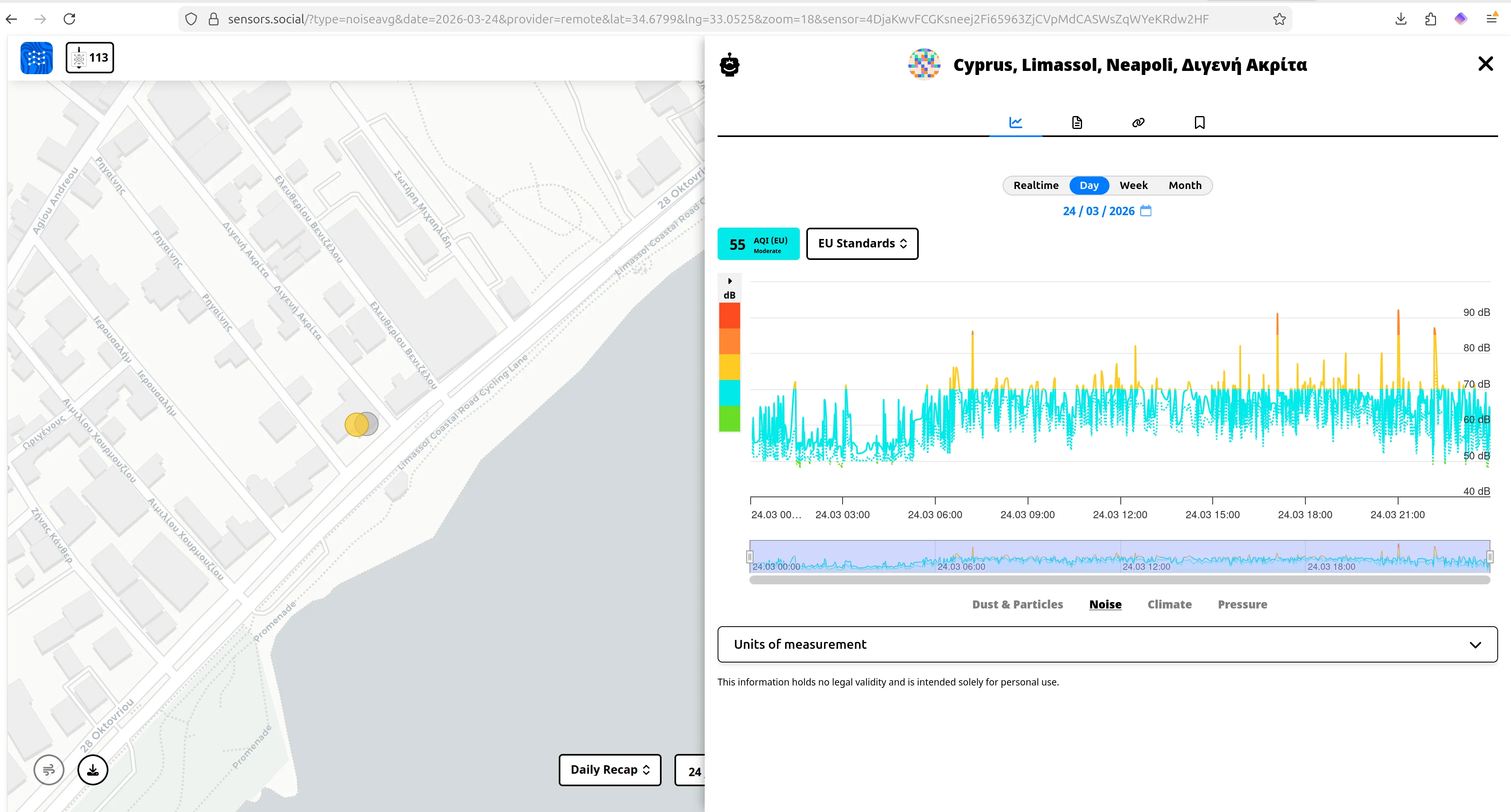
Noise regularly exceeds 70 dB during the day and spikes above 90 dB — equivalent to standing next to a running lawnmower. The WHO considers prolonged exposure above 65 dB harmful to cardiovascular health.
Germasogeia — quiet
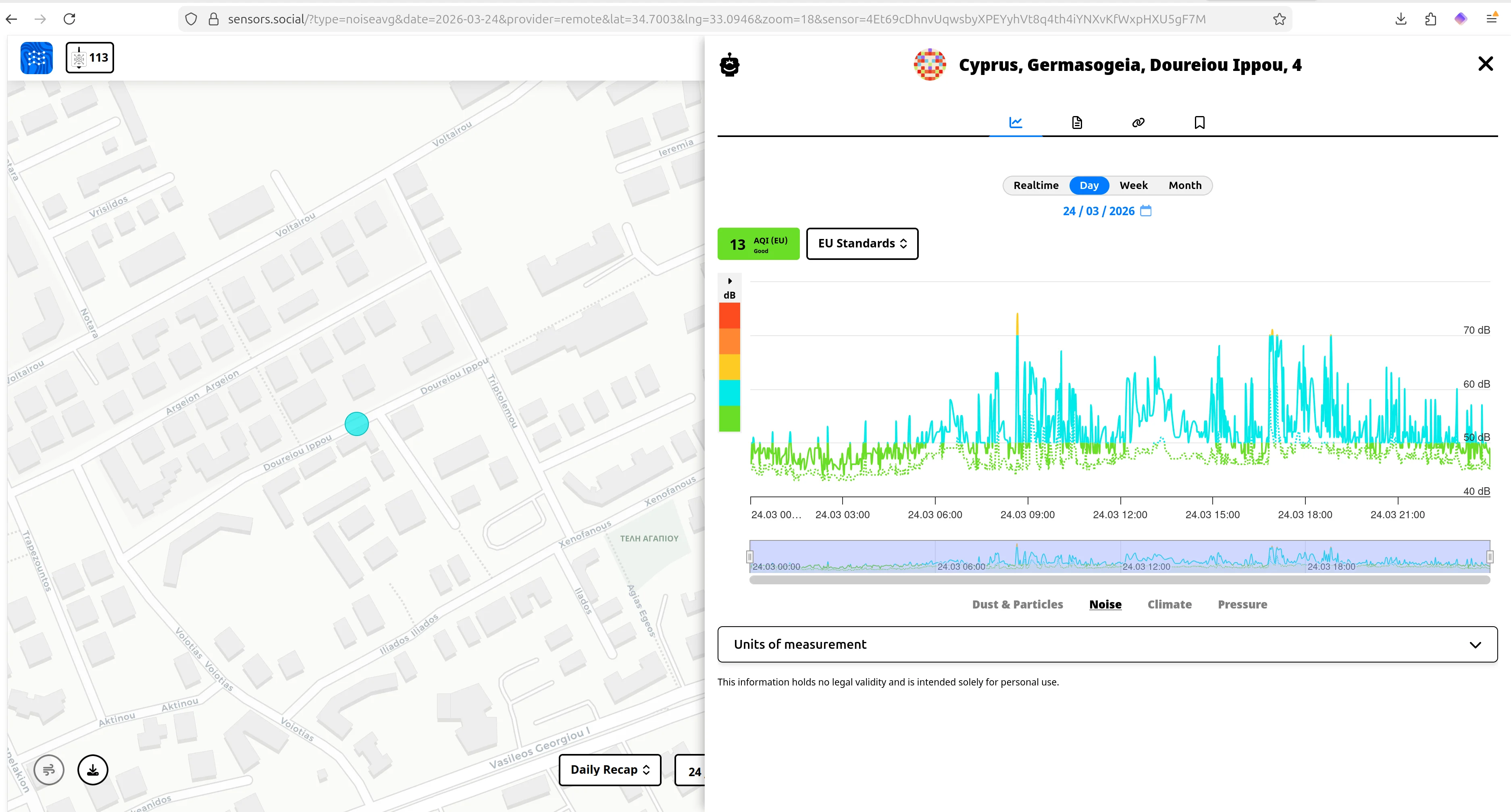
Daytime noise stays within a comfortable 50–60 dB range. This is the sound level of a normal conversation — perfectly acceptable for residential living.
Same city, similar building class — but entirely different quality of life. These graphs alone influenced a real decision about where to live.
It Works Both Ways
Noise data isn't just about complaints. If your balcony sensor shows six months or a year of consistently low noise, that's a selling point. Your apartment rents faster and at a higher price.
For property sales, we believe noise and air quality data from the balcony is already a must-have — like an energy efficiency certificate, but for livability.
How to Try This Yourself
- Mount an Altruist sensor on your balcony or outside your window.
- Collect data for at least one month — the sensor measures noise, air quality, temperature, and humidity 24/7.
- Your data appears on the public sensors.social map — accessible to anyone, verifiable, and tamper-proof.
- Present the graphs at your next negotiation. Let the data speak.
Want to try this approach? Get an Altruist sensor, mount it on your balcony, and collect a month of data. Then use the graphs in your next housing negotiation — and see how facts change the conversation.